Brief History
Addressing the nation on India's 68th Independence Day, Hon'ble Prime Minister Shri Narendra Modi urged the industry, especially the Micro, Small and Medium Enterprises (MSMEs) of India, to manufacture goods in the country with "zero defects" and to ensure that the goods have "zero effect" on the environment.
"We should manufacture goods in such a way that they carry zero defect and that our exported goods are never returned to us. We should manufacture goods with zero effect that they should not have a negative impact on the environment".
With an aim to make India a global manufacturing hub, the Prime Minister gave an open invitation to manufacturers and investors across the world to establish manufacturing units in India.
Rationale:
The MSME sector of India is a giant with around 6.33 crore units employing over 11 crore people. It contributes significantly to the GDP and exports. To sustain this momentum, it's imperative that MSMEs transition to higher levels of quality and environmental standards.
Introduction
The MSME Sustainable (ZED) Certification is an extensive drive of the Ministry of MSME, Government of India, to create awareness amongst MSMEs about Zero Defect Zero Effect (ZED) practices and motivate them for ZED Certification while also encouraging them to become MSME Champions.
Phase 1 (Active)
The Program is currently in Phase 1, specifically designed for the Manufacturing sector. MSMEs in this sector are encouraged to join the ZED journey and reap the benefits.
Phase 2 (Upcoming)
The ZED scheme will be expanded in Phase 2 to include the Service Sector, ensuring a broader impact on the national economy and sustainability goals.
Objective of MSME Sustainable (ZED) Certification
- To create proper awareness in MSMEs about ZED manufacturing and motivate them for ZED Certification.
- To drive MSMEs towards manufacturing of quality products using latest technology, tools & to constantly upgrade their processes for achievement of high productivity and high quality with Zero Defect & Zero Effect.
- To develop an ecosystem for ZED Manufacturing in MSMEs, for enhancing competitiveness and enablement of MSMEs.
- To promote adoption of ZED practices and recognising the efforts of successful MSMEs.
- To encourage MSMEs to achieve higher ZED Certification levels through continuous improvement.
- To increase the public awareness about the ZED branding and the ZED certified products of MSMEs.
Components
1. Industry Awareness Programmes/Workshops
Nationwide programs to orient MSMEs on the ZED Scheme and its significance in improving global competitiveness.
2. Training Programmes
Specific training sessions for MSME officials, consultants, and assessors to ensure effective implementation and assessment of ZED parameters.
3. Assessment & Certification
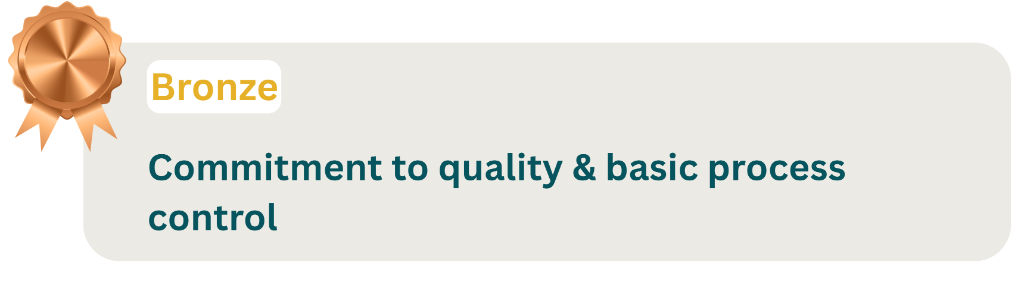
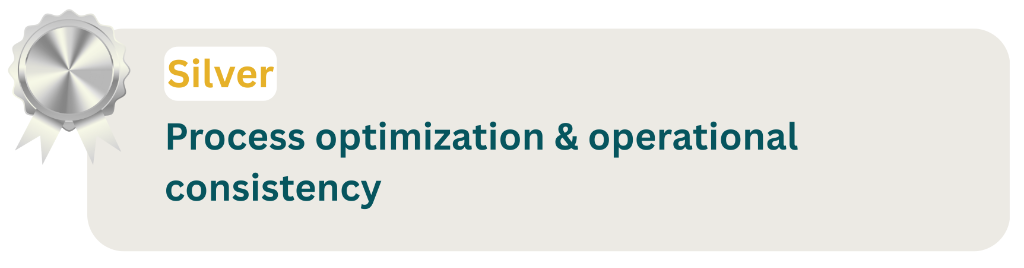
Rigorous evaluation of MSME units against the defined ZED maturity model levels: Bronze, Silver, and Gold.
4. Handholding & Consultancy
Provision of expert support to help units identify gaps and implement process/technology upgrades for moving towards Zero Defect Zero Effect.
5. Public Awareness & Branding
Strategic marketing efforts to highlight the ZED brand and increase the market value of ZED certified products.
ZED Levels

ZED Pledge
- Certification Level 1: BRONZE
- Certification Level 2: SILVER
- Certification Level 3: GOLD
Every MSME that embarks on the journey of ZED will have to take a “ZED Pledge” before applying for a ZED Certification Level (Bronze, Silver, Gold).
Certification on WASH Standard & other capacity building measures through MSME KAWACH will be available to MSMEs immediately after taking ZED Pledge.
After taking the ZED Pledge, the MSME can apply for any Certification Level if it feels that it can fulfil the requirements mentioned in each level. The intent of taking a ZED Pledge is to take a “pre-commitment” or a solemn promise by MSMEs to uphold the values of Zero Defect Zero Effect in their practices and to urge them to move ahead on the journey of ZED.
Eligibility
All MSMEs registered with the UDYAM registration portal (of the MoMSME) will be eligible to participate in MSME Sustainable (ZED) Certification and avail related benefits/incentives.
Subsidy on Cost of Certification
Any number of Units registered under one Udyam Registration can apply for subsidy under this Scheme. Each Unit (under one Udyam Registration) will need to apply for Certification separately to avail subsidy/benefits/incentives.
- MSMEs will be given financial assistance/subsidy for obtaining for a ZED Certification Level.
- An MSME unit will get subsidy as per the following
structure, on the cost of certification:
- Micro Enterprises: 80%
- Small Enterprises: 60%
- Medium Enterprises: 50%
Additional Subsidy:
- There will be an additional subsidy of 10% for the MSMEs owned by Women/SC/ST Entrepreneurs OR MSMEs in NER/Himalayan/LWE/Island territories/aspirational districts.
- In addition to above, there will be an additional subsidy of 5% for MSMEs which are also a part of the SFURTI OR Micro & Small Enterprises - Cluster Development Programme (MSE-CDP) of the Ministry.
MSMEs may opt for upgrading their Certification Level at any point of time before the expiry of validity of their existing ZED Certification. Cost and subsidy will remain the same for the applied Level.
- A limited-purpose joining reward of Rs. 10,000/- will be
offered to each MSME once they take
the ZED Pledge which needs to be utilized within a defined time period for the purpose
defined as per the following modalities:
- This joining reward may be used by an applicant MSME only once while applying for a ZED Certification (Bronze, Silver, Gold).
- If the joining reward is used for any Certification, then the cost of the reward will be first deducted from the cost of Certification and then the Subsidy may apply if applicable. For example, if an MSME uses the reward for applying for Bronze Certification, the effective cost to MSME becomes zero, while in case an MSME applies for the Silver or Gold Certification, the reward amount will be adjusted in the Certification Cost and the subsidy will apply on the balance amount as per the type of the MSME (Micro, Small or Medium).
- This joining reward will be valid only for 1 year after taking the ZED Pledge.
Certification Process
ZED Certification can be attained on 3 levels after taking the ZED Pledge:
- Certification Level 1: BRONZE
- Certification Level 2: SILVER
- Certification Level 3: GOLD
- After taking the ZED Pledge, an MSME can apply online for any Certification Level (Bronze, Silver, Gold) and would need to conform to all the requirements of the level applied for, in order to obtain the Certification.
- Every MSME embarking on the journey of ZED must submit an Undertaking.
- In case of a non-conformity, the applicant MSME would be given an opportunity to close the non-conformity(ies), in a defined time period, in order to be eligible for the desired level/Certification.
- The Final ZED Certificate will be issued based upon the findings and recommendation of the Accredited Assessment Agencies.
Ministry of MSME reserves the right to visit & inspect any MSME after Certification, which has availed any subsidy, benefit or incentives under this Scheme.
The process flow and requirement for each level is highlighted in subsequent pages.
Gap Analysis & Handholding
MSMEs with minimum Bronze certification are eligible to apply for handholding support. A provision of up to Rs. 5 Lakhs (per MSME) has been made available for handholding and consultancy support for MSMEs under ZED Certification for assisting them to move towards Zero Defect Zero Effect solutions. Out of this, an amount upto Rs. 2 Lakhs to be utilized for handholding support (as needed) through consulting organizations and up to Rs. 3 Lakhs may be utilized towards technology upgradation for moving towards zero effect solutions/pollution control measures/cleaner technology. The utilization of the Financial Support of upto Rs. 3,00,000/- for moving towards zero effect solutions will be subject to Consultant’s recommendations, verification by respective MSME-DI and approval by the PMAC.
The Ministry will subsidize the handholding support and technology upgradation financial support for moving towards zero effect solutions, as follows:
- Micro Enterprises: 80%
- Small Enterprises: 60%
- Medium Enterprises: 50%
Additional Subsidy:
- There will be an additional subsidy of 10% for the MSMEs owned by Women/SC/ST Entrepreneurs OR MSMEs in NER/Himalayan/LWE/Island territories/aspirational districts.
- In addition to above, there will be an additional subsidy of 5% for MSMEs which are also a part of the SFURTI OR Micro & Small Enterprises - Cluster Development Programme (MSE-CDP) of the Ministry.
Surveillance
A surveillance assessment (after a period of 18 months of achieving ZED Certification) will be conducted by QCI’s Accredited Assessment Agencies as a part of the ZED Certification. The surveillance assessment will only be applicable to those MSMEs which have achieved Silver & Gold Certification levels.
The surveillance assessment will be conducted as a remote assessment for both Silver & Gold levels and the cost of the assessment will be as under:
- ZED Silver Level: Rs. 10,000/-
- ZED Gold Level: Rs. 20,000/-
The MSMEs will be given financial assistance/subsidy for the surveillance assessment as per the following structure:
- Micro Enterprises: 80%
- Small Enterprises: 60%
- Medium Enterprises: 50%
Renewal after expiry of ZED Certificate
After the expiry of the validity of the ZED Certificate, MSMEs can go for Renewal of their ZED Certification level in order to continue availing associated benefits/incentives.
Documents
Guidelines
- Addendum - 2 to MSME Sustainable (ZED) Certification Scheme Guidelines
- Free ZED Certification For Women Owned MSMEs
- MSME Sustainable (ZED) Certification Scheme Guidelines
ZED Certification
- ZED Registration User Manual
- ZED Bronze Certification Manual
- ZED Silver and Gold Certification Manual
- ZED User Manual for Financial Assistance
- ZED User Manual for Handholding Support
- ZED User Manual for Surveillance Assessment
- ZED Awareness PPT